Posts Tagged ‘Virginia’

Yorktown, Virginia

October 3, 2009

On a sad note we learned that Betsy’s brother, Ray, died yesterday (Friday) afternoon.  Please keep Betsy and Ray’s family in your prayers.  Our posting and visiting your blogs are likely going to be hit and miss for the next few days.

*********************
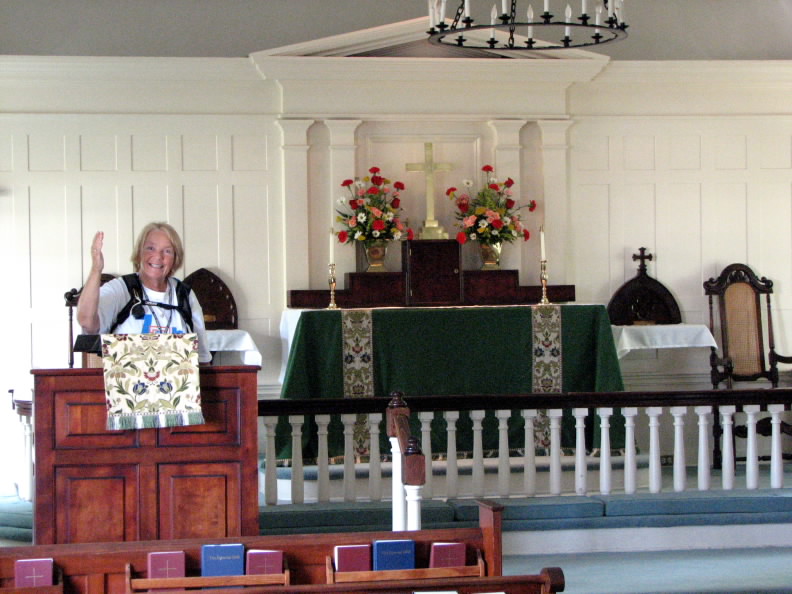
Betsy in Grace Episcopal Church, Yorktown, Virginia.  June 22, 2007.

Betsy in Grace Episcopal Church, Yorktown, Virginia. June 22, 2007.

While we were in Virginia in 2007, we visited the town of Yorktown, Virginia as well as the battlefield there.  The town was formed in 1691, and was a thriving port at the time of the Revolution.

There were three things that we found to be of particular interest in Yorktown.  The first was Grace Episcopal Church, which was built in 1697 and is still in use.  The churchyard contains the grave of Thomas Nelson, who was one of the signers of the Declaration of Independence.

Nelson’s home is still standing and we were able to go inside.  Thomas Nelson was  a general in the American army during the Siege of Yorktown.  When he heard that Lord Cornwallis was using his house as headquarters, Nelson directed the artillery that was firing on the house.  There is still a cannonball in the outer wall of the house on the side facing the American siege lines.

The third interesting thing for us about the town was the Ballard House.  Betsy’s mother was a Ballard and Betsy thought there might be a connection between her and John Ballard, the owner of the house.  She has since learned that John Ballard was an ancestor.

To see more of our visit to Yorktown click HERE.
My World # 50: Yorktown Battlefield

September 22, 2009
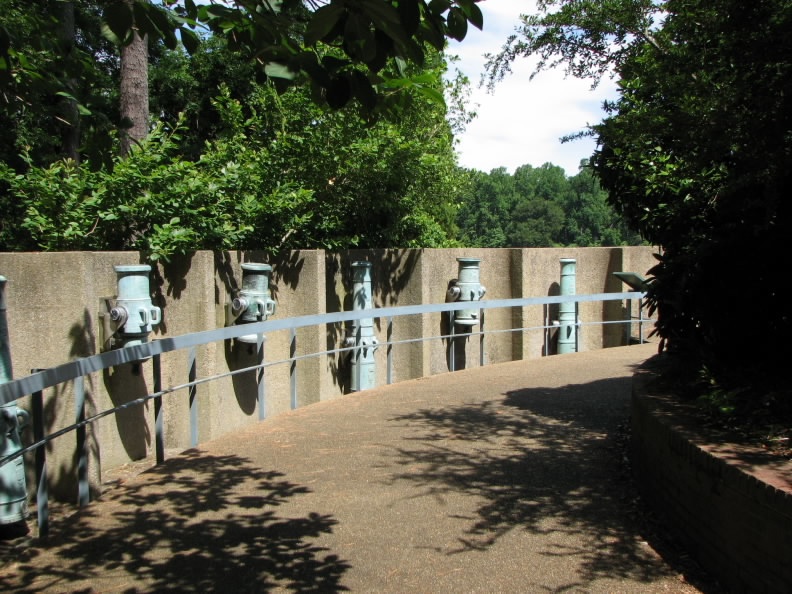
Cannon surrendered by the British at Yorktown, October 19, 1781.

Cannon surrendered by the British at Yorktown, October 19, 1781.

This is my post for the My World meme.  It is hosted by Klaus, Ivar, Sandy, Wren, Louise and Fishing Guy.  To learn more about our world or to join and share your part of the world, click HERE.

In June, 2007, Betsy and I made an anniversary trip to Virginia.  We went to spend several days at Colonial National Historical Park and at Williamsburg.

The siege of Yorktown in 1781 was the last major battle of the American Revolution.  It came about after a French fleet defeated a British fleet at the mouth of Chesapeake Bay, making it impossible for British Lord Cornwallis to get help or to escape by sea.  The American and French army marched to Yorktown on September 28, 1781, and after a week of preparation, constructed their first siege line on October 6.  They began bombarding British positions on October 9.

After a round-the-clock bombardment that lasted nine days, Cornwallis requested a cease fire to discuss surrender terms.  Two day later, on October 19, 1781, he formally surrendered his army.  As the British army marched to the field to lay down their arms, the British fife and drum corps play “The World Turned Upside Down”.  When Lord North, the British prime minister, learned of Cornwallis’s defeat, he is reported to have cried, “Oh God!  It is all over!”

To see more of the Yorktown Battlefield click HERE.

Watery Wednesday # 50: The Schooner Alliance

August 26, 2009
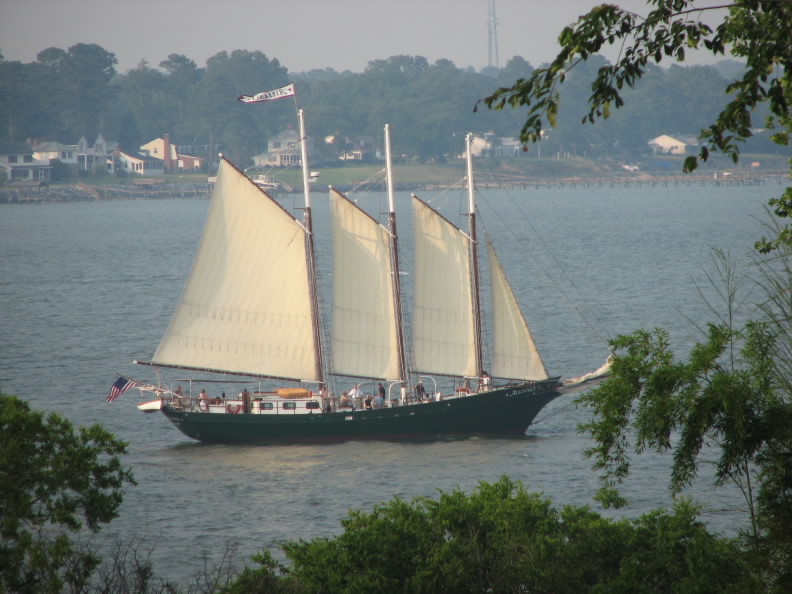
The schooner Alliance, Yorktown, Virginia.  June 19, 2007.

The schooner Alliance, Yorktown, Virginia. June 19, 2007.

This is my post for Watery Wednesday.  To see more of our beautiful watery world, or to join and post your own pictures to share, click HERE.

When Betsy and I were in Yorktown, Virginia, we were near the waterfront one evening when we saw the schooner Alliance sail down the river.  I’ll have to admit that she looked beautiful to me, but then I’ve always been fascinated by sailing ships.

The Alliance is 105 foot three masted gaff-rigged schooner, which sails twice daily from Riverwalk Landing Pier in Yorktown from May thru October.  The rest of the year it sails in the Caribbean.

The Alliance was built in 1995 in Palm Coast, Florida, and was brought to Yorktown in 2005.  She has a diesel engine as well as the full set of sails and can accommodate 49 passengers on daysails or 12 overnight passengers.

Historic Jamestowne

August 22, 2009
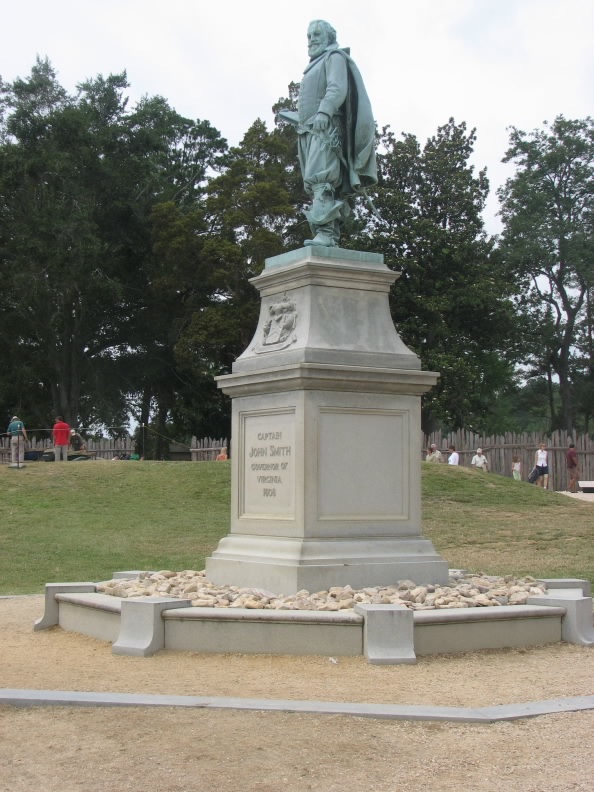
The statue of Captain John Smith at Historic Jamestowne, Virginia.  June 20, 2007.

The statue of Captain John Smith at Historic Jamestowne, Virginia. June 20, 2007.

On our anniversary trip in 2007, Betsy and I went to Virginia.  After visiting Jamestown Settlement (a living history museum) we went  to Historic Jamestowne, the site of the first  English settlement in North America.

I assume that the story of Jamestown is still taught in our schools.  We were taught that the settlers were all ‘gentlemen’ who didn’t do anything but look for gold, that the Indian maiden Pocohantas saved Captain John Smith, and that Captain Smith saved Jamestown.  We also learned that later almost all the settlers died and the survivros decided to give up and return to England, only to be met by supply ships and new settlers at the mouth of the James River.

There was some truth in what we were taught, but there was also much more.  Jamestown survived and grew.  The first representative assembly in the New World convened in the Jamestown church on July 30, 1619.  In 1624 Virginia became a crown colony with Jamestown as the capital.  A “New Town” grew up east of the fort which contained wharfs, warehouses, taverns and merchant’s homes.  Jamestown remained the capital until the statehouse burned in 1698.  The capital was then moved to Williamsburg and the town of Jamestown began to slowly disappear.

I must admit that it was very interesting and exciting to be at the site of so much history.  If you would like to see more of Jamestown, click HERE.

Jamestown Settlement

July 30, 2009
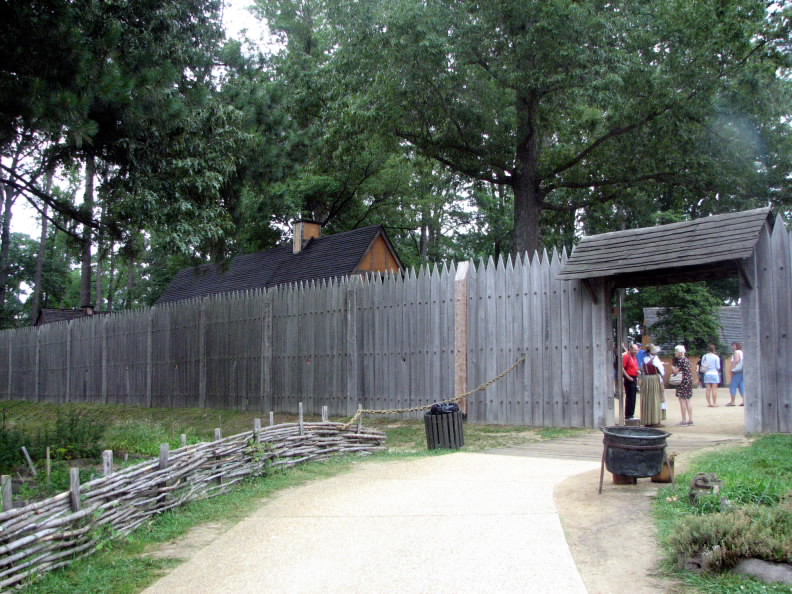
The gate at James Fort in Jamestown Settlement.  June 20, 2007.

The gate at James Fort in Jamestown Settlement. June 20, 2007.

We’ve had rain off and on for the past couple of days, so I’ve been able to get more work done on some of my back-logged photos.  If we had enough rain for me to completely catch up, I think we would all need arks.

The picture above is the entrance to James Fort at Jamestown Settlement in Virginia.  Betsy and I went there in 2007 to celebrate the 400th anniversary of the settling of Jamestown.  Jamestown Settlement is a living-history museum on the road leading to the National Park, so we stopped there first.

Jamestown Settlement includes a film about the first two decades of the Jamestown colony and several galleries of artifacts from both English settlers and Powhatan Indians.  The Settlement also includes a re-created Powhatan Indian Village, replicas of the three ships which brought the English settlers to Virginia, and a full-scale replica of the fort built by the settlers.

You can see more of our pictures from Jamestown Settlement HERE.

Yorktown Victory Center

July 25, 2009
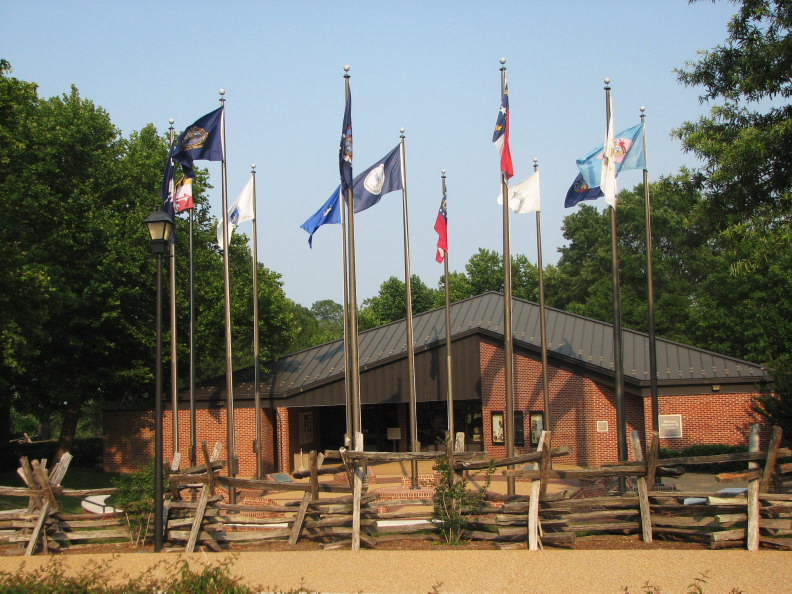
Yorktown Victory Center, Yorktown, Virginia.  June 19, 2009.

Yorktown Victory Center, Yorktown, Virginia. June 19, 2007.

I’ve had a chance to work on photos over the past several days and came across pictures that were taken when Betsy and I visited Virginia in 2007.  We went to celebrate our anniversary and to visit Jamestown, Williamsburg and Yorktown.

The first place we visited when we got to the Colonial National Historical Park was the Yorktown Victory Center.  The Victory Center is a living-history museum that helps bring the American Revolution to life.   In addition to a film about the Siege of Yorktown, there are re-enactors in a Continental Army encampment who help bring that period to life.

We enjoyed our time at the Victory Center and found it to be very interesting.  Afterwards we saw a little of the riverfront in the town of Yorktown.  It was a very nice beginning of our historical vacation.

If you would like to see more pictures from the Yorktown Victory Center, click HERE.

Betsy’s ‘Dream’ Cabin

March 22, 2009

cabin01

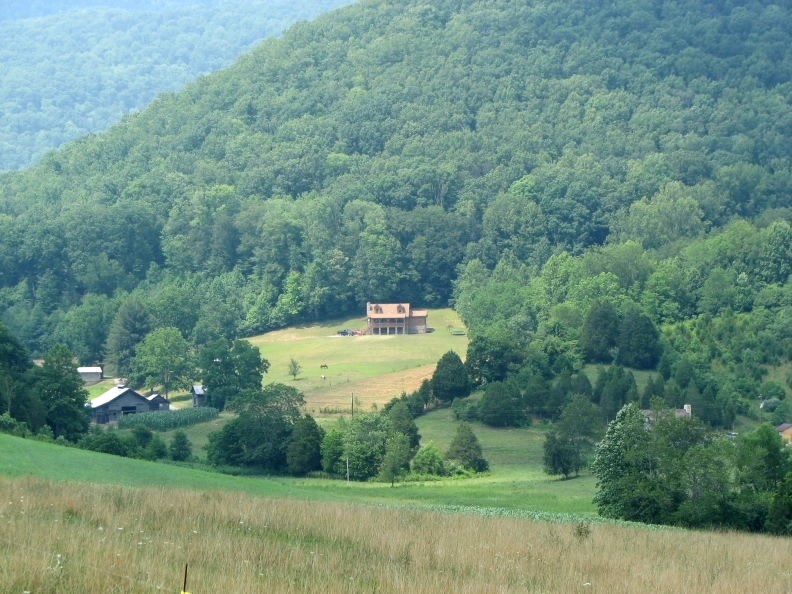
Shortly after Betsy and I got married we started talking about finding our retirement home.  At first we talked about finding a log cabin.  Betsy really liked the idea of a cabin on the top of a hill with lots of trees around it.

It didn’t take us long to discover that our ‘dream’ house was way beyond our wallet.  We finally found our house in the Glade.  It’s not a log cabin, but it does have wooden siding.  It’s on a hill, but not at the top.  But it does have lots of trees around it.  And we thoroughly love it.

But that doesn’t keep us from keeping an eye out for a cabin that would fit into our dreams.  Last summer we went to Virginia for a reunion of a branch of Betsy’s family.  While driving through the country side near Big Stone Gap, we spotted the cabin in the picture above.  All Betsy said was ‘Ohhhh….’.

It’s not on top of a hill, but hey, we can’t have everything.

Tall Ships

January 26, 2009
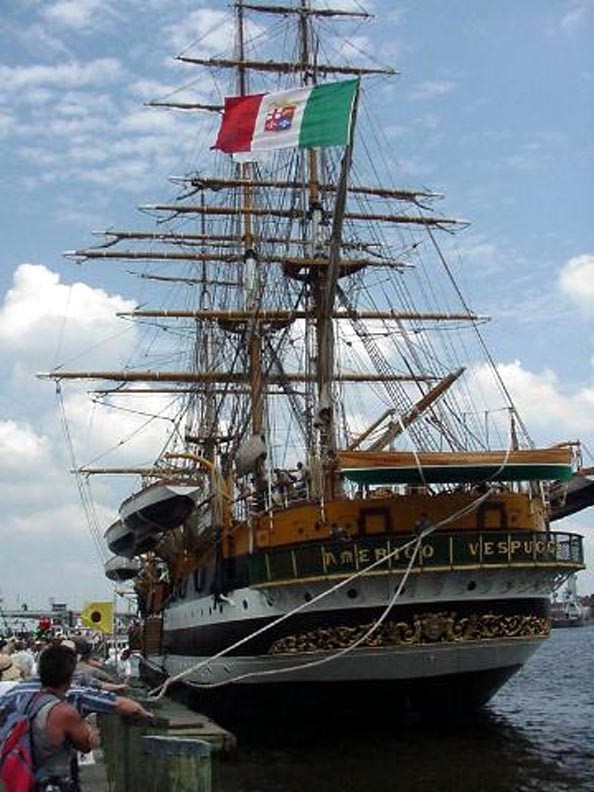
The Americo Vespucci, Norfolk, Virginia.  June, 2000.

The Amerigo Vespucci, Norfolk, Virginia. June, 2000.

Sunday seemed rather chilly here in the Glade, so I spent a good part of the afternoon trying to organize some of my BB (Before Betsy) pictures.  That’s when I came across the picture above.

I have always enjoyed ships, especially sailing ships.  In my younger days I made ship models and I had one of Old Ironsides that took me seven years to complete.  In the spring of 2000 I went to Norfolk,  Virginia, with my daughter Kelly and her husband, Chuck, to see the tall ships.

The tall ships are large sailing ships from around the world.  Although the designs of the tall ships go back to the Age of Sail, most of the ships are relatively modern.  There are periodic races between the tall ships which bring the ships to many ports around the world.  In 2000 they stopped at Norfolk while on their way to New York.

Although there were nearly fifty ships in Norfolk, one that I especially enjoyed visiting was the Amerigo Vespucci, an Italian full-rigged three masted ship about 330 feet long.  The Vespucci is modeled after 18th century 74-cannon ships of the line, although it doesn’t carry any cannon.  The hull is painted black with two white stripes to designate what would be the two gun decks.

The Amerigo Vespucci is still used to train junior officers of the Italian navy, and is a beautiful ship.  If you enlarge the picture you can see some of the ornamentation on her stern.

With luck I can get Betsy to go with me to see the tall ships some time in the future.

America the Beautiful

July 23, 2008

What is the real America?  Is it the big cities we see on television or in the movies, or is it the simpler America of Norman Rockwell?  One reason Betsy and I enjoy living on the Cumberland Plateau is that life here is a little slower and a little simpler than it would be in a larger city.

This weekend we travelled to a portion of the country that is almost as beautiful as our plateau — southwestern Virginia.  We were able to stay off interstate and other major highways most of the time and got to see the America that exists away from the interstate highways.

Betsy’s hometown is Big Stone Gap, Virginia.  BSG is a small city nestled in the mountains.  It used to be a center for coal mining, but most of the mines in the area have now closed.

But the mountains are still there and they are grand to behold.  Between the mountains are many wide valleys which contain rolling hills and many farms and small towns.  Every hill and every curve seemed to present a picture postcard view.

It’s hard to put into words the way we felt about the countryside through which we travelled.  Perhaps the best way to put it is to say the Norman Rockwell’s America still exists.