Posts Tagged ‘History’

29 Years Ago: Who Shot J. R.?

November 21, 2009

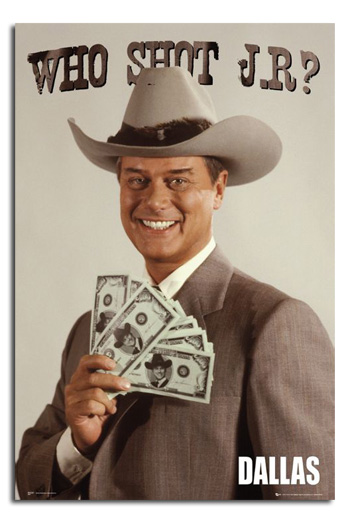
Who shot J. R. Ewing? Anyone who was around in 1980 and above the age of about six remembers that question and the speculation that it raised.

Dallas, a slick soap opera about the private lives and public shenanigans of the dysfunctional, oil-rich Ewing family,  was America’s hottest prime time series in 1980.  Jock Ewing, the family patriarch, had two sons, J. R. and Bobby.  J. R. was the character millions of viewers loved to hate — a charming and unscrupulous Texas oilman who didn’t let little things like morality or the law get in his way of acquiring whatever he wanted.

An unidentified gunman shot the scheming J. R. in the final episode of the show’s second season, but Dallas fans had to wait nearly eight months to find out who fired the shot.  First there was a summer of reruns, followed by a seven-week actors’ strike.  The first three episodes of the third season were filled with false leads about the identify of the shooter, but on November 21, 1980, the truth was revealed.  The shooter was J. R.’s sister-in-law and mistress, who shot him in a fit of anger.  This show earned the biggest audience share in television history up to that point — 41 million of the nearly 78 million households in the U. S. watched the show.

The huge ratings generated by the Who Shot J. R.? stunt helped popularize the practice of ending a television season with a cliffhanger.

146 Years Ago: The Gettysburg Address

November 19, 2009

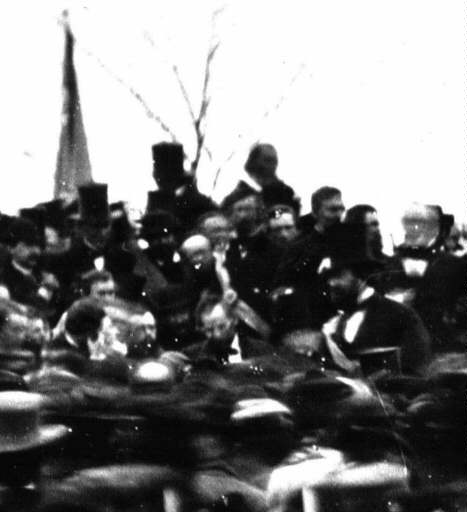
President Lincoln at Gettysburg. Photograph from the National Archives.

“Four score and seven years ago …”

Many Americans my age had to learn that entire speech.  I wonder how many students today even recognize it?

President Abraham Lincoln delivered his Gettysburg Address on November 19, 1863, at the dedication of the national cemetery at the Civil War battlefield.  After the battle in July, the town of Gettysburg planned to buy land for a cemetery and then ask the families of the dead to pay for their burial.  But David Willis, a 32-year-old attorney objected to this idea and wrote Governor Andrew Curtin of Pennsylvania, suggesting instead a National Cemetery to be funded by the states.  Governor Curtin authorized the purchase of 17 acres for a cemetery to honor those lost in the battle.

Willis and the planning committee originally planned to dedicate the cemetery on Wednesday, October 23, and invited Edward Everett, who had served as Secretary of State, U. S. Senator, U. S. Representative, Governor of Massachusetts and president of Harvard University, to be the main speaker.  Everett, who was a widely known and respected as an orator, replied that he would be unable to prepare an appropriate speech in such a short period of time, and requested that the date be postponed.  Willis and the committee agreed, and the dedication was postponed until Thursday, November 19.

It was then that President Lincoln was invited — he received his invitation on November 2.

Everett delivered a two-hour formal address at Gettysburg.  President Lincoln spoke a little over two minutes, surprising many by the shortness of the speech and leaving many others quite unimpressed.  Over time, however, his speech, ending with the words “government of the people, by the people, for the people” has come to symbolize the definition of democracy itself.

Four score and seven years ago our fathers brought forth on this continent, a new nation, conceived in liberty, and dedicated to the proposition that all men are created equal.

Now we are engaged in a great civil war, testing whether that nation, or any nation so conceived and so dedicated, can long endure. We are met on a great battlefield of that war. We have come to dedicate a portion of that field, as a final resting place for those who here gave their lives that that nation might live. It is altogether fitting and proper that we should do this.

But in a larger sense, we cannot dedicate – we cannot consecrate – we cannot hallow – this ground. The brave men, living and dead, who struggled here, have consecrated it, far above our poor power to add or detract. The world will little note, nor long remember, what we say here, but it can never forget what they did here. It is for us the living, rather, to be dedicated here to the unfinished work which they who fought here have thus far so nobly advanced. It is rather for us to be here dedicated to the great task remaining before us – that from these honored dead we take increased devotion to that cause for which they gave the last full measure of devotion – that we here highly resolve that these dead shall not have died in vain – that this nation, under God, shall have a new birth of freedom – and that government of the people, by the people, for the people, shall not perish from the earth.

Abraham Lincoln – November 19, 1863
150 Years Ago: The Man on The Flying Trapeze

November 12, 2009

FlyingTrapeze


Do children still learn/sing this song?

He floats through the air
With the greatest of ease,
The daring young man
On the flying trapeze;
His actions are graceful,
All girls he does please,
And my love he has stolen away.

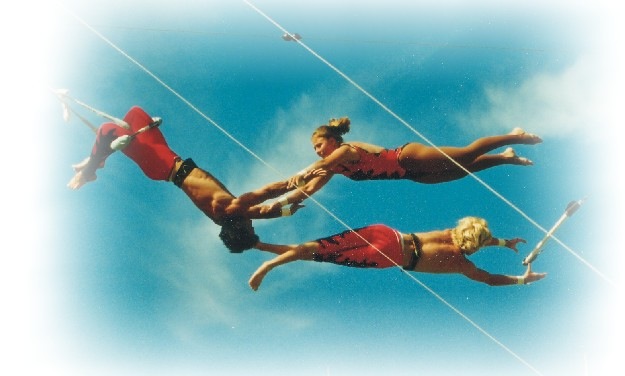
There are now many innovative styles of flying trapeze acts, such as those performed by Cirque Du Soleil.  But in a traditional flying trapeze act, the flyer mounts a narrow board and jumps from it so that gravity makes the  trapeze swing.  The flyer waits for a call from the catcher to make sure he or she leaves at the correct time in order for a successful catch to be made.  The flyer usually performs an aerial trick and is then aught by the catcher, who is swinging from a separate catch bar.  The flyer is then thrust back to the fly bar to return to the board.

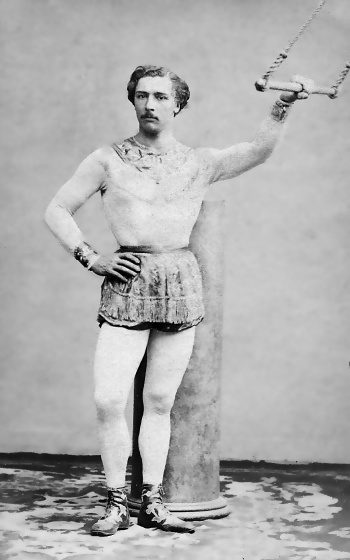
Jules_Léotard2

The first public performance of a flying trapeze act was on November 12, 1859, at Cirque Napoleon in Paris, France.  The performance was invented and performed by Jules Leotard, who also designed the garment named after him.

198 Years Ago: The Battle of Tippecanoe

November 7, 2009
05-29BattleGround-TippecanoeMonument

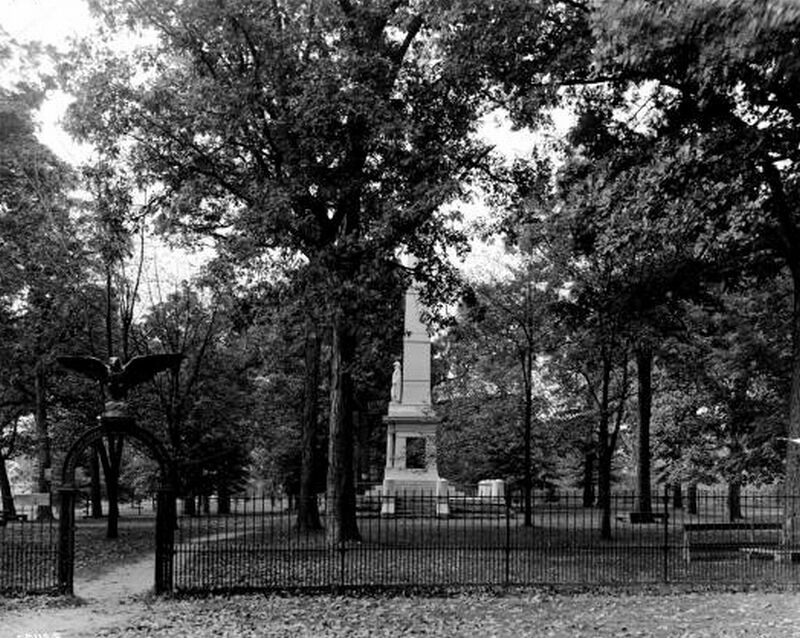
The Tippecanoe Battlefield Monument

Did you learn about ‘Tippecanoe and Tyler too’ in school?  I not only learned about  the slogan but I also got familiar with  the site of the battle that gave William Henry Harrison the nickname Tippecanoe.  The battleground was adjacent to a church camp that I attended several years as a youngster.

The Battle of Tippecanoe came about because of the efforts of two Shawnee indian brothers, Tecumseh and the Prophet.  The Prophet led a spiritual movement to encourage the Indians to return to traditional ways, while Tecumseh worked to form a confederation  among the various tribes.  In 1808 the brothers moved their followers to Prophetstown near the Tippecanoe River in the Indiana Territory.  By 1811 such a large number of natives lived at Prophetstown that white settlers in Ohio and the Indiana Territory demanded that the government do something to proptect them.  William Henry Harrison, governor of the Indiana Territory led an army against Prophetstown in the fall of 1811.

The Prophet, against the advice of Tecumseh who was absent, attacked the Americans after telling his followers that the white’s bullets would not harm them.  The Indians attacked Harrison’s men before daybreak  on the morning of November 7, 1811.  Harrison’s army defeated the Indians, but they suffered heavy losses:  62 men killed and 126 wounded.  The Indian’s losses are not known, but the Americans did drive off the natives and burn Prophetstown to the ground.

Battle

The Battle of Tippecanoe

The defeat fatally weakened Tecumseh’s confederation, but Harrison became known as “Old Tippecanoe”.  In 1840 Harrison used his reputation as a successful Indian fighter to  run for President of the United States.  His campaign slogan was “Tippecanoe and Tyler too!”

Yorktown, Virginia

October 3, 2009

On a sad note we learned that Betsy’s brother, Ray, died yesterday (Friday) afternoon.  Please keep Betsy and Ray’s family in your prayers.  Our posting and visiting your blogs are likely going to be hit and miss for the next few days.

*********************

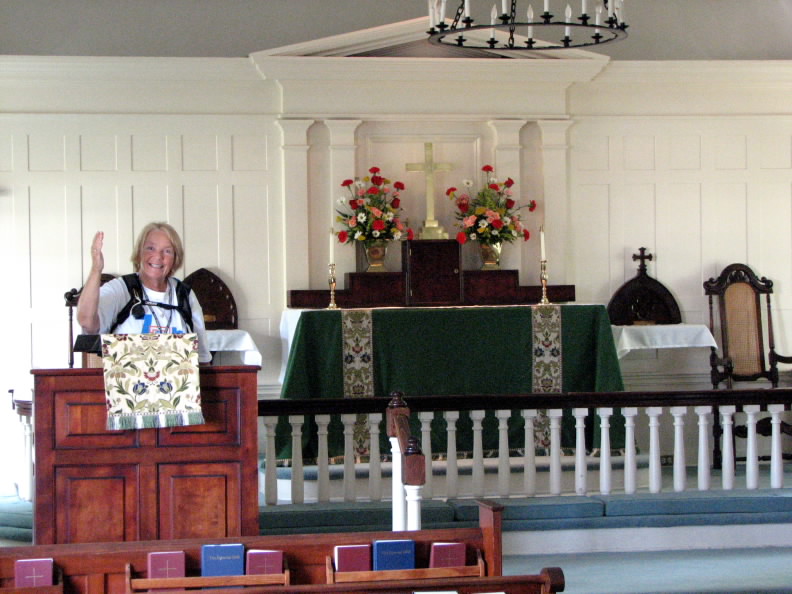
Betsy in Grace Episcopal Church, Yorktown, Virginia.  June 22, 2007.

Betsy in Grace Episcopal Church, Yorktown, Virginia. June 22, 2007.

While we were in Virginia in 2007, we visited the town of Yorktown, Virginia as well as the battlefield there.  The town was formed in 1691, and was a thriving port at the time of the Revolution.

There were three things that we found to be of particular interest in Yorktown.  The first was Grace Episcopal Church, which was built in 1697 and is still in use.  The churchyard contains the grave of Thomas Nelson, who was one of the signers of the Declaration of Independence.

Nelson’s home is still standing and we were able to go inside.  Thomas Nelson was  a general in the American army during the Siege of Yorktown.  When he heard that Lord Cornwallis was using his house as headquarters, Nelson directed the artillery that was firing on the house.  There is still a cannonball in the outer wall of the house on the side facing the American siege lines.

The third interesting thing for us about the town was the Ballard House.  Betsy’s mother was a Ballard and Betsy thought there might be a connection between her and John Ballard, the owner of the house.  She has since learned that John Ballard was an ancestor.

To see more of our visit to Yorktown click HERE.

Skywatch Friday: Castillo de San Marcos

September 25, 2009
Castillo de San Marcos, St. Augustine, Florida.  August 4, 2009.

Castillo de San Marcos, St. Augustine, Florida. August 4, 2009.

This is my post for Skywatch Friday, a meme for sharing views of the sky from all over the world.  To see more, or to join and share your own photos of the sky, click HERE.

We were in St. Augustine, Florida, the day before Betsy’s birthday this year.  We stopped to visit Castillo San Marcos.  The day was beautiful with white clouds floating through a blue sky.    It seemed possible to step back in time on such a day.

My World # 50: Yorktown Battlefield

September 22, 2009
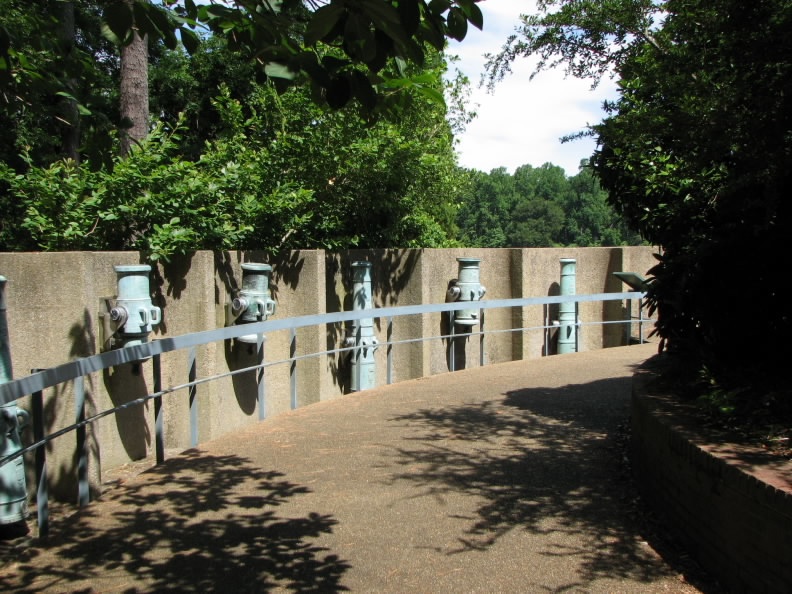
Cannon surrendered by the British at Yorktown, October 19, 1781.

Cannon surrendered by the British at Yorktown, October 19, 1781.

This is my post for the My World meme.  It is hosted by Klaus, Ivar, Sandy, Wren, Louise and Fishing Guy.  To learn more about our world or to join and share your part of the world, click HERE.

In June, 2007, Betsy and I made an anniversary trip to Virginia.  We went to spend several days at Colonial National Historical Park and at Williamsburg.

The siege of Yorktown in 1781 was the last major battle of the American Revolution.  It came about after a French fleet defeated a British fleet at the mouth of Chesapeake Bay, making it impossible for British Lord Cornwallis to get help or to escape by sea.  The American and French army marched to Yorktown on September 28, 1781, and after a week of preparation, constructed their first siege line on October 6.  They began bombarding British positions on October 9.

After a round-the-clock bombardment that lasted nine days, Cornwallis requested a cease fire to discuss surrender terms.  Two day later, on October 19, 1781, he formally surrendered his army.  As the British army marched to the field to lay down their arms, the British fife and drum corps play “The World Turned Upside Down”.  When Lord North, the British prime minister, learned of Cornwallis’s defeat, he is reported to have cried, “Oh God!  It is all over!”

To see more of the Yorktown Battlefield click HERE.

Scenic Sunday # 62: Charleston

September 20, 2009
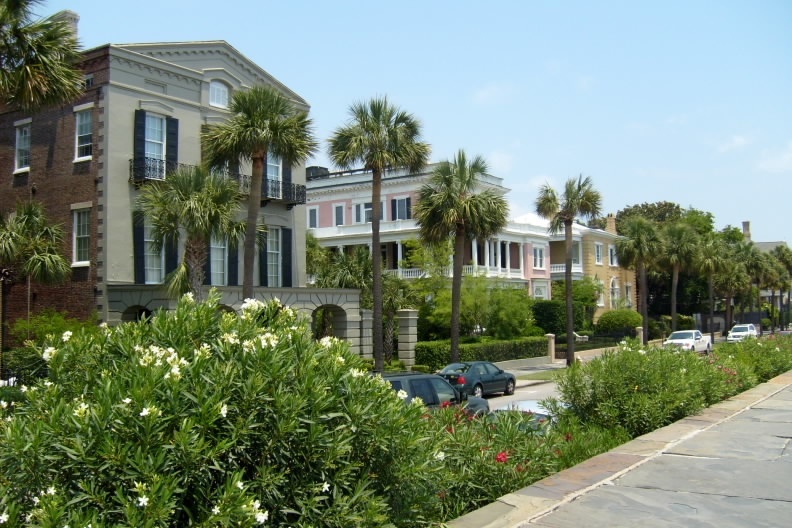
East Battery Street, Charleston, South Carolina.  June 22, 2008.

East Battery Street, Charleston, South Carolina. June 22, 2008.

This is my post for the Scenic Sunday meme, which shares beautiful scenes from around the world.  To see more Scenic Sunday posts, or to join and show your own pictures, click HERE.

The picture above was taken on the seawall of Charleston Harbor in Charleston, South Carolina.  It shows some of the beautiful homes on East Battery Street, many of which date back to the Civil War.  Fort Sumter, site of the first shots of the Civil War, is in the harbor off to the right.  Behind me and to the left is White Point Gardens, more commonly known as The Battery.

I lived in South Carolina for three years and have visited Charleston several times.  It’s a beautiful city and I thoroughly enjoy walking through the the historic district (as long as it’s not too hot!).

The picture above was taken in June, 2008, when Betsy and I visited Charleston on our anniversary trip.  If you would like to see some more scenes from the area around The Battery, click HERE.

Historic Jamestowne

August 22, 2009
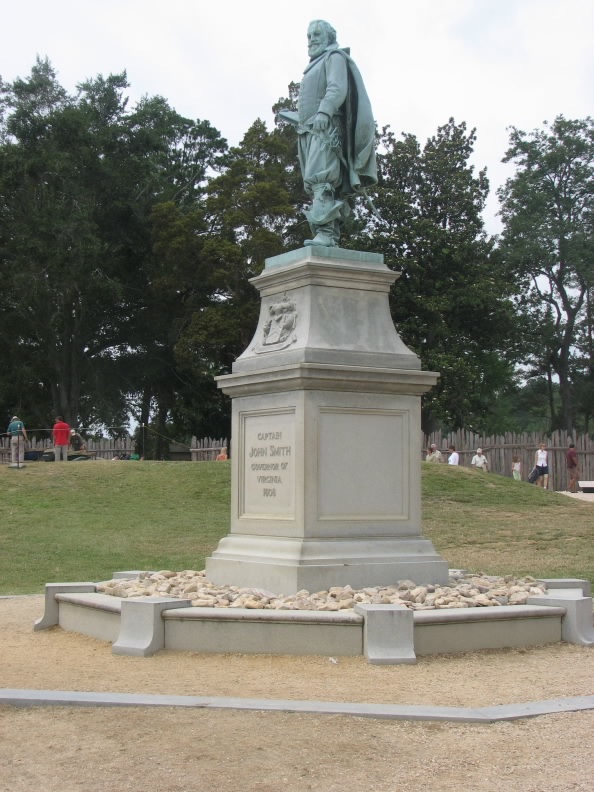
The statue of Captain John Smith at Historic Jamestowne, Virginia.  June 20, 2007.

The statue of Captain John Smith at Historic Jamestowne, Virginia. June 20, 2007.

On our anniversary trip in 2007, Betsy and I went to Virginia.  After visiting Jamestown Settlement (a living history museum) we went  to Historic Jamestowne, the site of the first  English settlement in North America.

I assume that the story of Jamestown is still taught in our schools.  We were taught that the settlers were all ‘gentlemen’ who didn’t do anything but look for gold, that the Indian maiden Pocohantas saved Captain John Smith, and that Captain Smith saved Jamestown.  We also learned that later almost all the settlers died and the survivros decided to give up and return to England, only to be met by supply ships and new settlers at the mouth of the James River.

There was some truth in what we were taught, but there was also much more.  Jamestown survived and grew.  The first representative assembly in the New World convened in the Jamestown church on July 30, 1619.  In 1624 Virginia became a crown colony with Jamestown as the capital.  A “New Town” grew up east of the fort which contained wharfs, warehouses, taverns and merchant’s homes.  Jamestown remained the capital until the statehouse burned in 1698.  The capital was then moved to Williamsburg and the town of Jamestown began to slowly disappear.

I must admit that it was very interesting and exciting to be at the site of so much history.  If you would like to see more of Jamestown, click HERE.

Battleship North Carolina

August 20, 2009
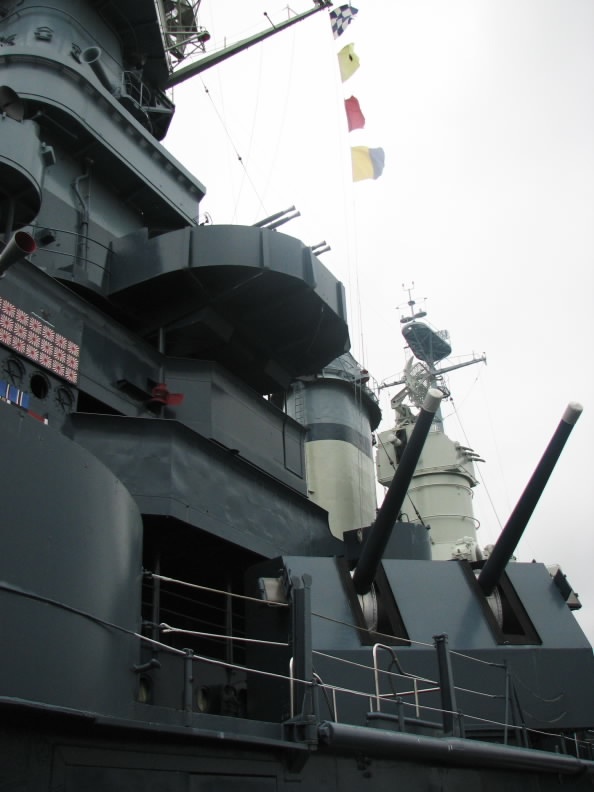
5-inch and AA guns on the North Carolina.  May, 2007.

5-inch and AA guns on the North Carolina. May, 2007.

We got some much-needed rain here on the Plateau today, so I was able to get some work done on the computer.  One of the things I got done was working on some of the pictures we took while we were at the beach in 2007.

One day of our stay was rainy, so we drove to Wilmington, North Carolina, where we visited the battleship North Carolina.  The North Carolina was launched June 13, 1940 and commissioned April 9, 1941.  At the time of her commissioning she was considered to be most powerful ship afloat.

The North Carolina participated in every major naval offensive in the Pacific and earned 15 battle stars.  During the war she steamed over 300,000 miles.  Although the Japanese claimed to have sunk her six times, she survived the war with a loss of 10 men killed in action and 67 wounded.

In 1958 the announcement that the North Carolina was to be scrapped led to a statewide campaign by the citizens of North Carolina to save the ship and bring her to her namesake state.  The campaign was successful and the battleship arrived at her current berth in Wilmington on October 2, 1961.  She was dedicated as the State’s memorial to its World War II verterans on April 29, 1962.

It’s possible to tour almost all departments of this ship, from the engine room to the flag bridge.  We thoroughly enjoyed our visit — we were glad that we had a rainy day while we were at the beach.

If you would like to see more of the North Carolina click HERE.