Archive for the ‘Travels’ Category

On the Road Again

September 26, 2011

Highlights of our most recent trip. September, 2011.

(Note:  All pictures may be enlarged by clicking on them.)

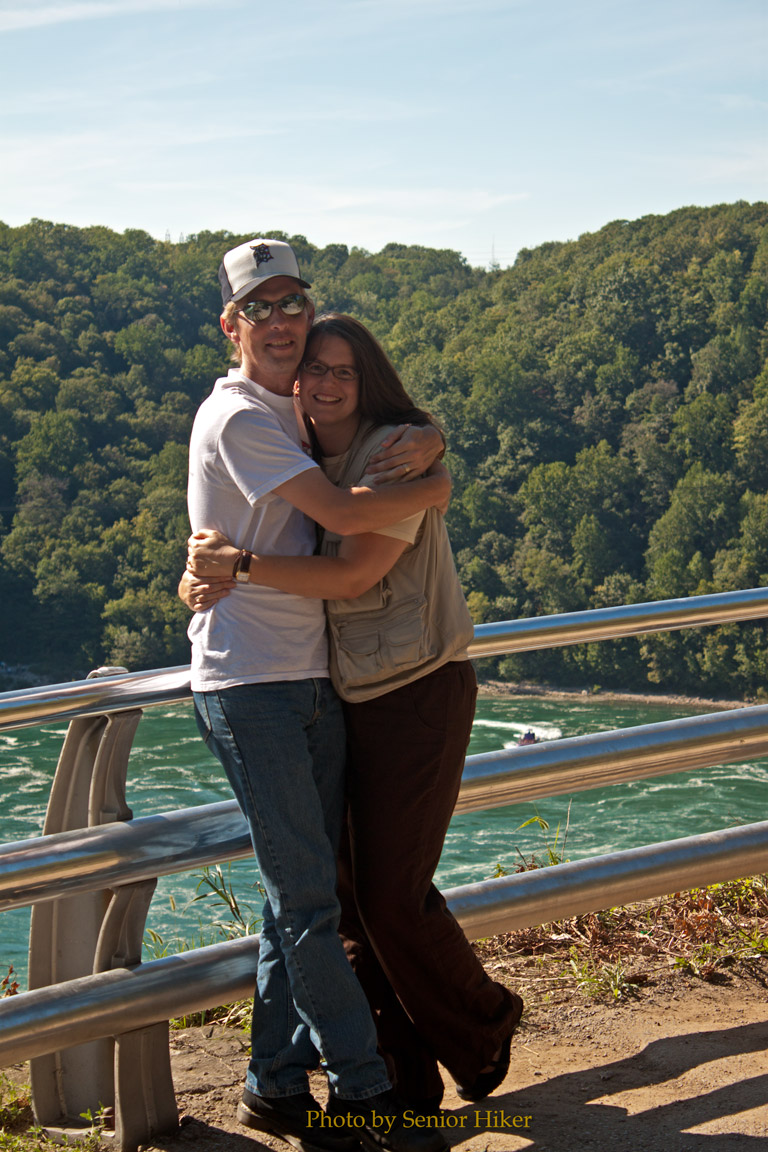
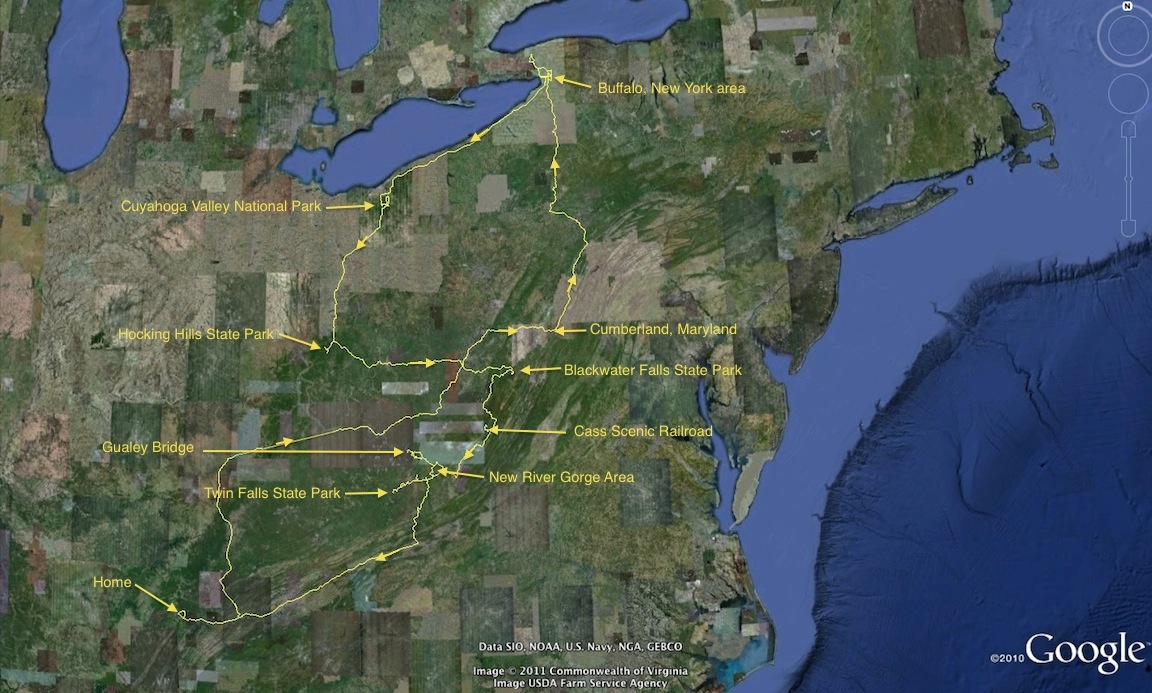
Betsy and I hit the road again earlier this month.  Since we headed west in June, we decided to head north and east this time.  The main purpose of our trip was to visit my daughter and her husband near Buffalo, New York.

We had originally planned to go on to Vermont to see some of the covered bridges in that state, but hurricane Irene wiped out three of the bridges we wanted to see, plus several the roads we were going to travel.  So we basically decided to play it by ear and see what we could find.  After leaving Buffalo we drove toward Cleveland, Ohio, to visit Cuyahoga Valley National Park.  The park, which is relatively new, contains a waterfall we had wanted to see on an earlier trip, but did not.

A blog friend of Betsy’s had said that Hocking Hills State Park in Ohio was a wonderful place to hike and visit waterfalls.  We decided to stop there for a visit as well.
We had both wanted to visit Blackwater Falls in West Virginia, so we drove there, having an adventure on mountain roads to get there.  Blackwater State Park is absolutely beautiful, and we will definitely plan on going back so we can spend more time there.  After leaving Blackwater Falls we took a ride at the Cass Scenic Railroad State Park, where we traveled to the top of Balk Knob behind a steam engine.

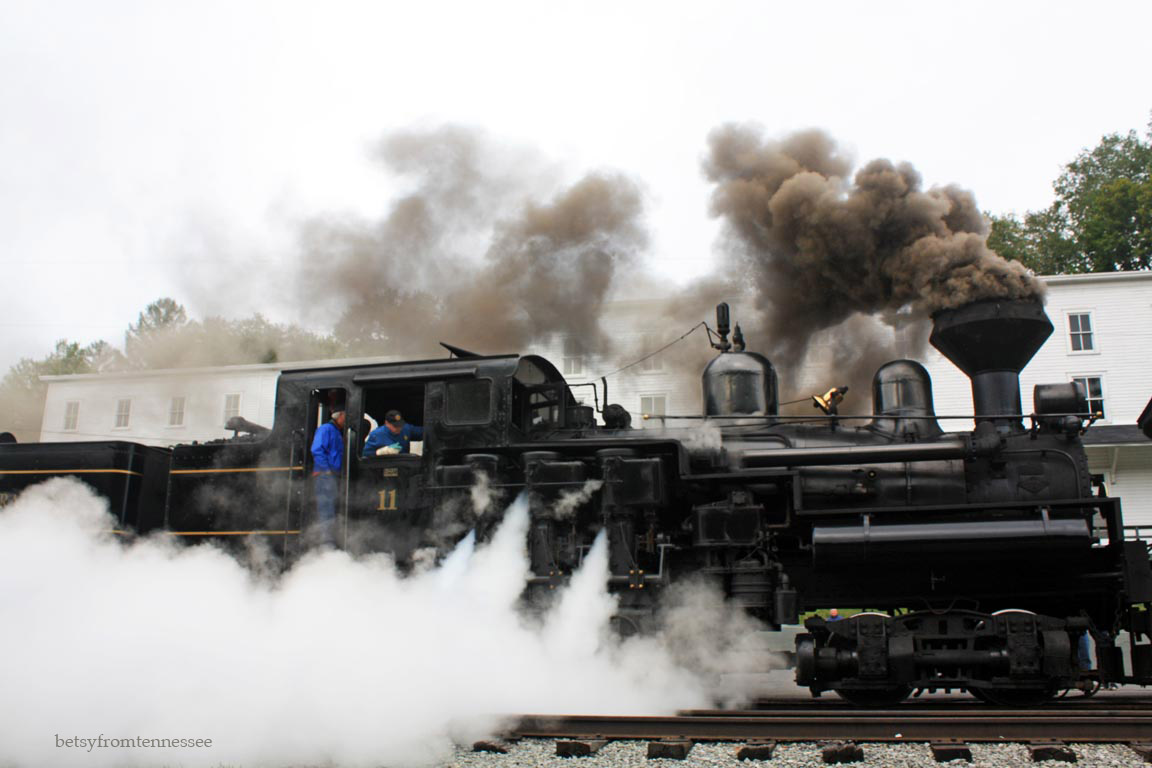
Engine leaving the station at Cass Scenic Railroad State Park, West Virginia. September 16, 2011. (Photo by Betsy)

We also wanted to revisit the New River Gorge in West Virginia.  We had seen the upper New River last year, but this year we saw the New River Gorge Bridge and drove down to the bottom of gorge and back up.  We also visited several other parts of the New River National River before heading back home.
It was a wonderful trip, and I now have hundreds more pictures to organize and get ready to share.

You’ve been warned!

Dragonflies

August 25, 2011
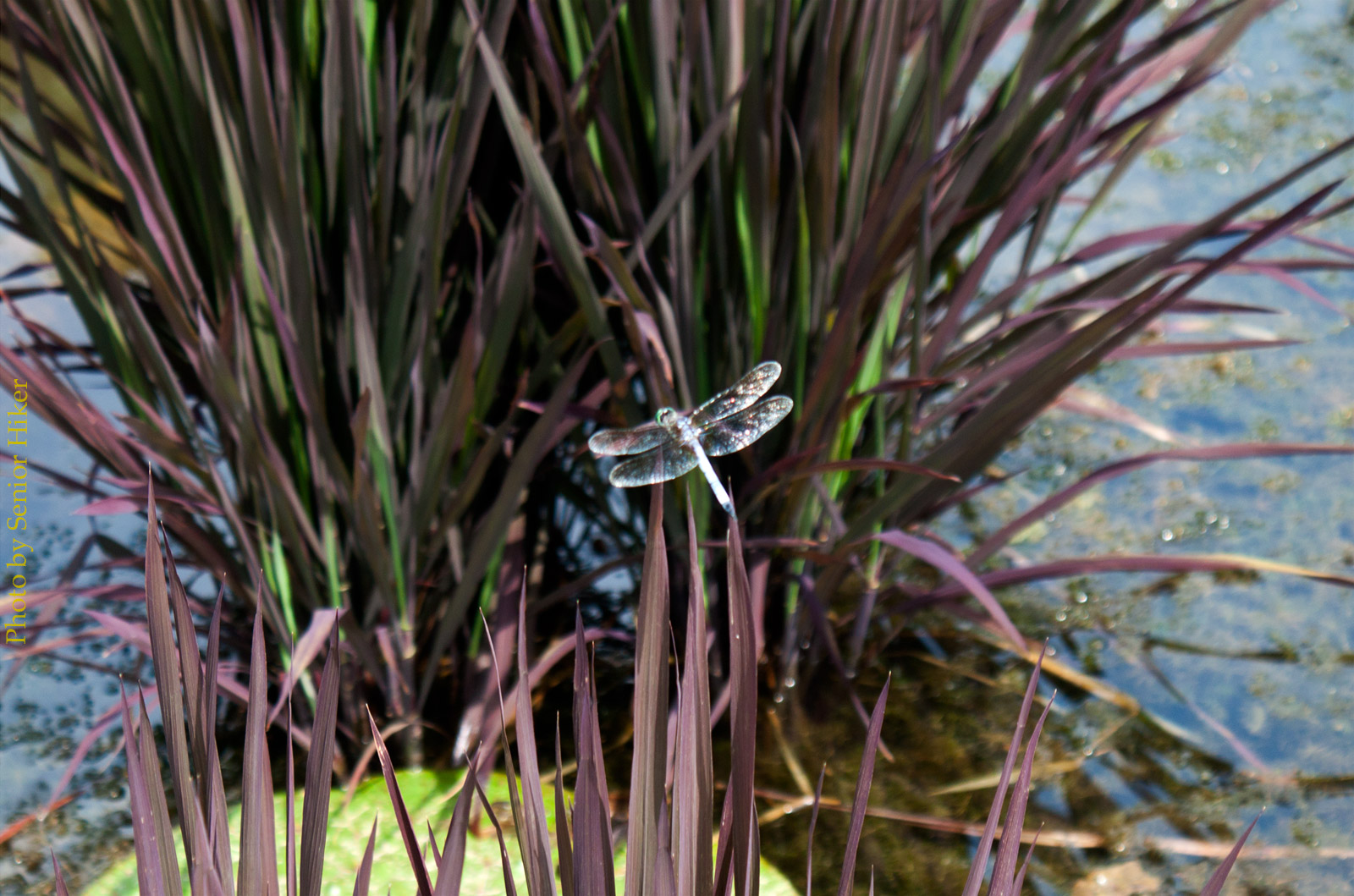
Dragonfly at the Italian Garden on the Biltmore Estate, Asheville, North Carolina.  August 5, 2011.

Dragonfly at the Italian Garden on the Biltmore Estate, Asheville, North Carolina. August 5, 2011.

While Betsy and I were in the Italian Garden at Biltmore, I was photographing water lilies when this dragonfly started flying around the blossoms I was trying to photograph.  When I moved to a different flower, it also moved.  I didn’t have the proper lens to get macro of the dragonfly, but I liked the way the wings looked in the sunlight, so I got the picture above.

Dragonfly at the Biltmore Estate, Asheville, North Carolina. August 5, 2011.

A little later I got him in a better pose.  I haven’t had much experience capturing critters like these, but I did like the way these pictures turned out.  I may have to try this again with the proper lens.

The Agate Bridge

August 18, 2011

The Agate Bridge at the Petrified Forest National Park, Arizona. June 13, 2011.

The Agate Bridge in the Petrified Forest National Park is a 110-foot long petrified log across a gully washed out by centuries of flood waters.  The stone log, which was harder than the sandstone around it, resisted erosion and remained suspended as the softer rock beneath it washed away.

After the Petrified Forest National Monument was established in 1906, conservationists felt the bridge needed architectural support.  In 1911 masonry pillars were erected beneath the log.  In 1917 the pillars were replaced by the concrete span seen in the picture above.

Current National Park Service philosophy allows the natural forces to continue to act upon unusual features.  If it was discovered today, the Agate Bridge would be left in its natal state.  Even with the support placed under it nearly a century ago, the same forces that created the Agate Bridge will eventually cause it to fall.

For another perspective of the Agate Bridge click HERE.

Could That Be Snow?

July 21, 2011

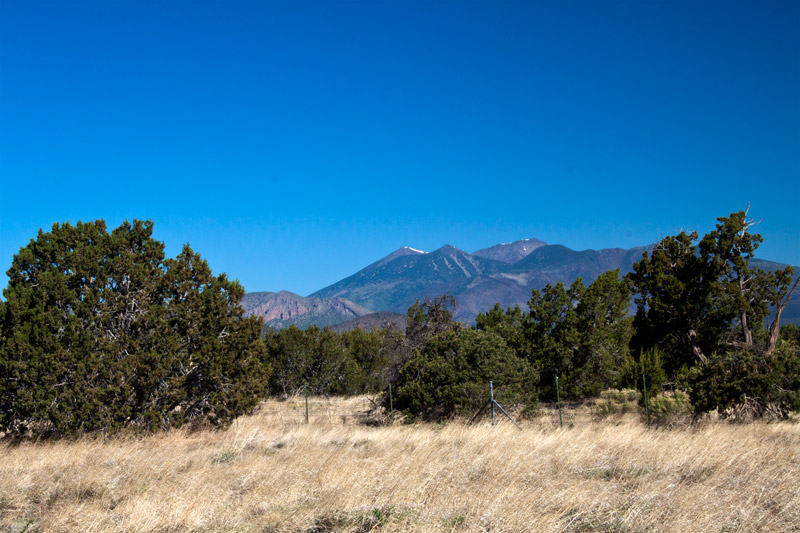
Could that white on the mountain be snow? Taken on I-40 near Flagstaff, Arizona. June 14, 2011.

As we drove toward Flagstaff, Arizona, on the morning of June 14, I noticed some white on a mountain top ahead of us.  Could that possibly be snow?  Two days earlier we had been driving across Oklahoma and Texas and the temperature outside had been 102°.  That white must be some kind of fence or building.

I kept my eye on the mountain as we drove, and quite frankly I kept changing my mind.  “That is definitely snow!”  “That can’t be snow.”  My Beautiful Bride, the snow expert in the family, was busy on her laptop, so I didn’t say anything.

After another twenty miles or so, I finally told Betsy that I thought there was snow on top of the mountain ahead of us.  Of course, she thought I was out of my mind, but when she looked up, she, too, thought it was snow.  So, as any blogger would do, I pulled to the side of the road to get the picture above.  So what do you think, snow or no snow?

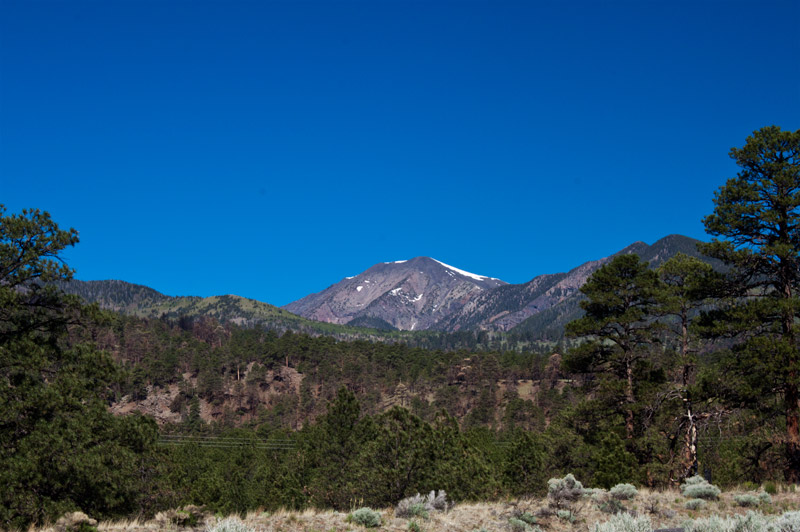
On Highway 89 east of Flagstaff. June 14, 2011.

When we got off the interstate and headed north, we got a little closer to the mountain.  That is definitely snow!

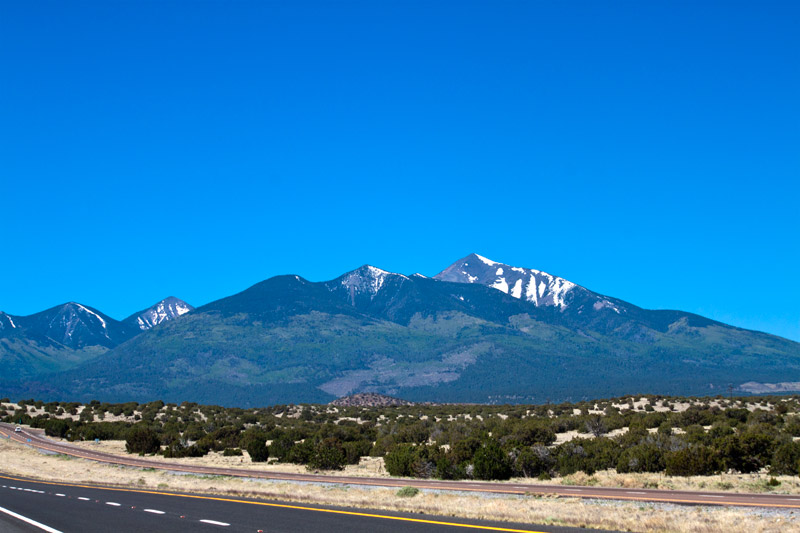
Looking back toward Flagstaff. June 14, 2011.

Betsy was definitely excited now.  When we were north of Flagstaff, we could look back at several peaks which still had a snow cover.  It was hard to believe we were looking at snow while driving across what the map said was desert.

Wide Open Spaces of Texas

July 14, 2011

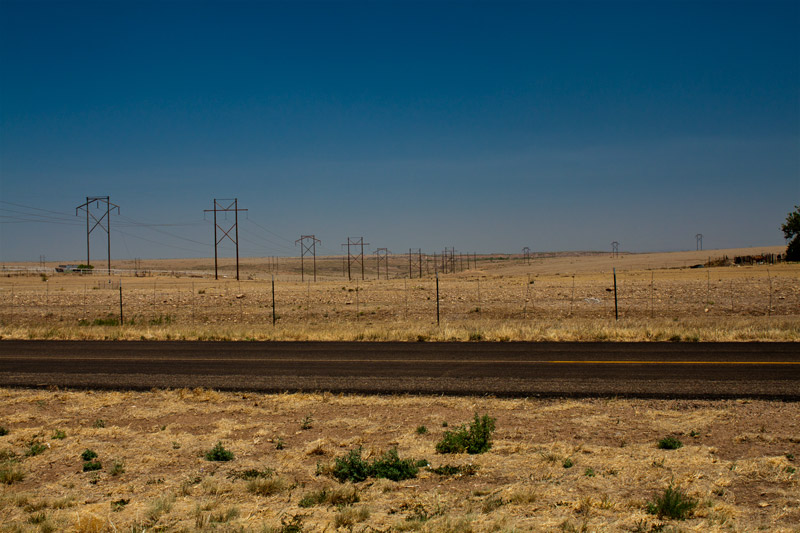
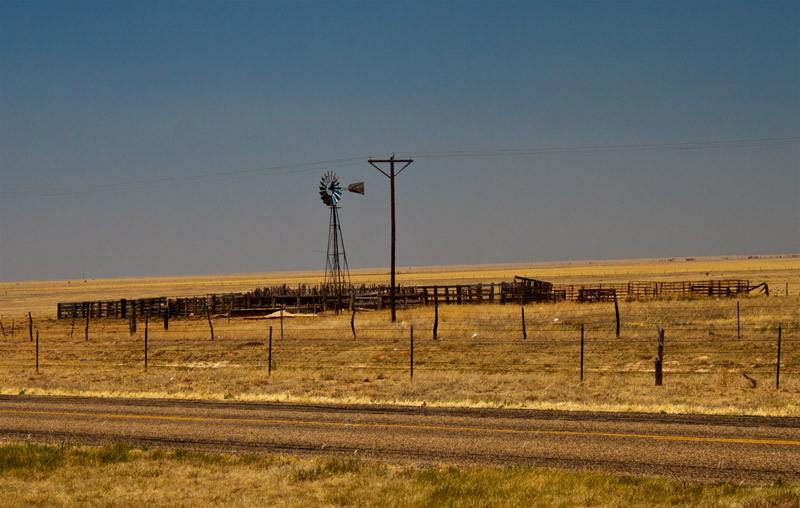
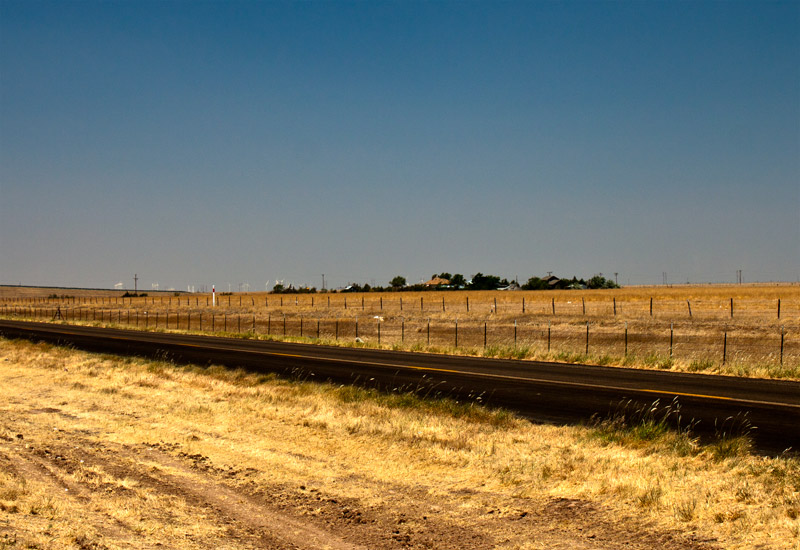
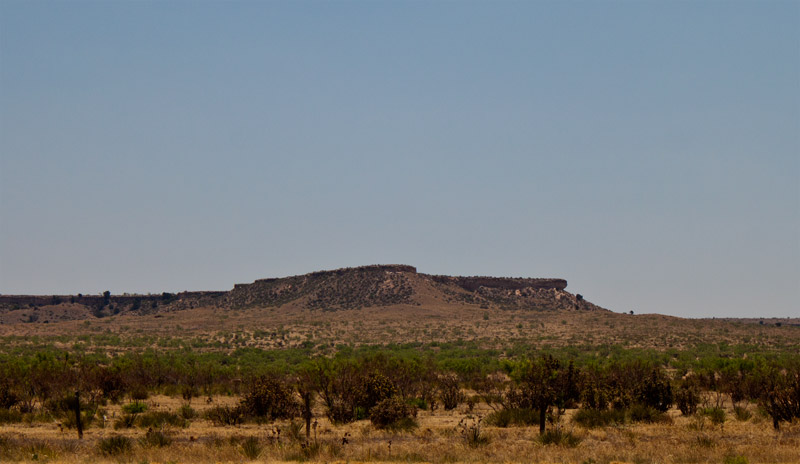
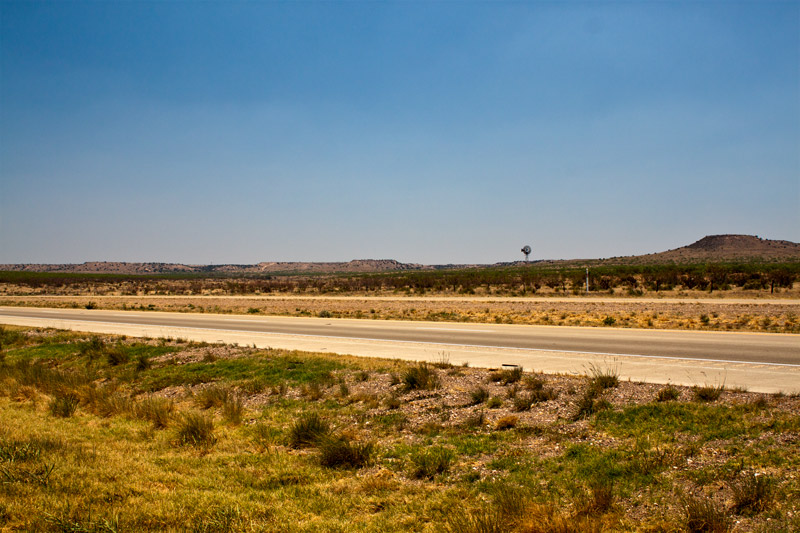
The Texas landscape west of Amarillo. June 12, 2011.

One of the first decisions Betsy and I had to make when planning our trip west was to fly or to drive.  There were advantages and disadvantages to each means of travel, but since our Prius, Mrs. P, is comfortable and gets 50+ MPG, we decided to drive so we could see more of our great country.

I must admit that I found the different landscapes we saw on our recent trip to be fascinating.  I’ve spent most of my life in the Midwest, in the Carolinas and here in Tennessee.  The wide open spaces of Texas were amazing.  At times it seems you could see forever.  We thought Texas looked as dry as it is in fact.

We passed a corral around an old-fashioned windmill.  We didn’t see any cattle around what I assume is a water station, but it did help break up the horizon.

Trees with green leaves were so rare that we were excited to see the trees around those buildings in the distance.  If you look closely you can see wind turbines on the horizon to the left of the trees.

As we got closer to New Mexiico, we began to see some mesas on the horizon.  We also noticed a little more green in the landscape.

There were even more windmills now and then.

Fort Smith National Historic Site

July 7, 2011

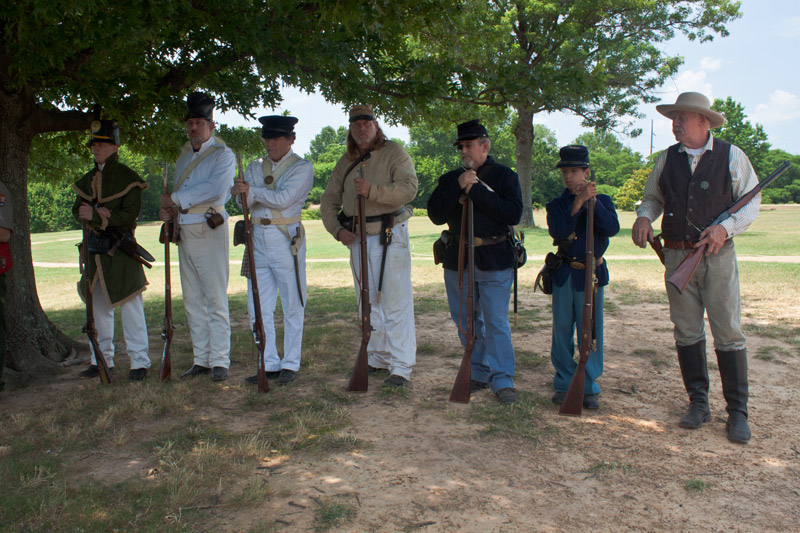
The uniforms of soldiers involved in Fort Smith's history. June 11, 2011.

One of the first places we visited on our recent trip west was Fort Smith National Historic Site in Arkansas.  During our visit we  were fortunate to be able to hear a presentation by a park ranger on the history of Fort Smith.  The ranger was supported by the re-enactors wearing the uniforms of soldiers during the different periods of the fort’s history.

Fort Smith was established in December, 1817, by a company of the U. S. Rifle Regiment (the soldier on the extreme left in the photo above).  The fort was established to maintain peace between the Osage and Cherokee Indians.  The original fort was abandoned in 1824.

In the 1830s Fort Smith became a supply depot for Indians and soldiers (next two soldiers in white) moving westward along “The Trail of Tears”.  In 1838 a new Fort Smith was constructed near the site of the first.   This was a masonry fort, but it was also used primarily as a supply depot.

Confederates (the soldier in butternut in the middle of the group above) took possession of Fort Smith when Arkansas seceded in April, 1861, but was recaptured by Union troops (next two soldiers) on September 1, 1863.

In 1872 the Federal Court for the Western District of Arkansas took over the fort.  The barracks were modified to serve as a courthouse and jail.  During this time the fort was a base for U. S. Marshals (the man on the extreme right).

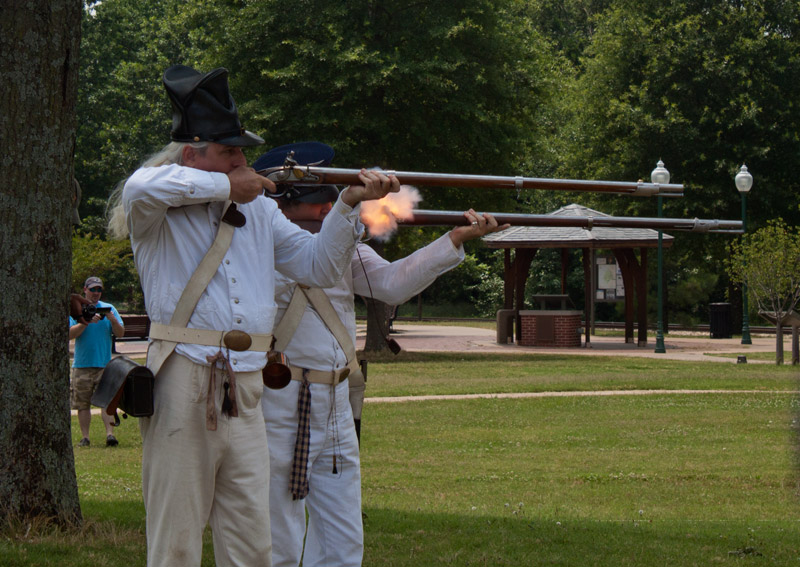
The re-enactors described the uniforms they were wearing and gave a firing demonstration of their weapons.  The early muskets certainly made for an interesting show.

Firing 1830-era muskets. June 11, 2011.

This gives new meaning to 'the smoke of battle'.

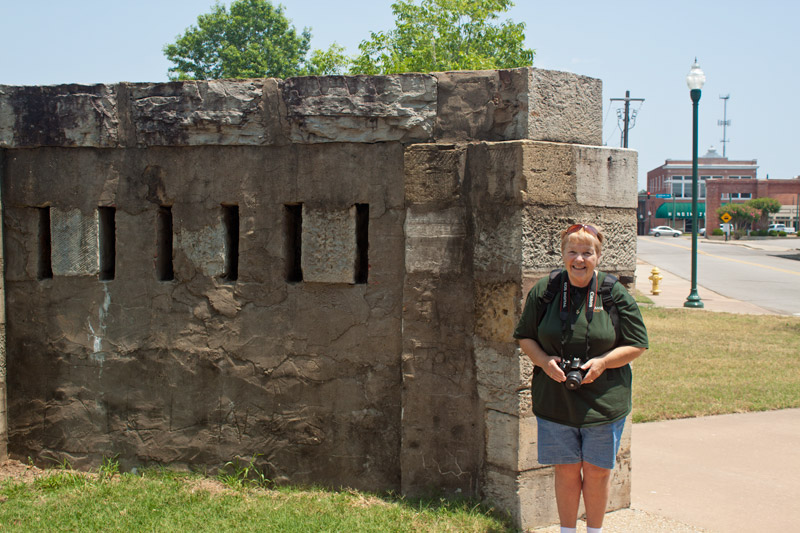
Betsy at a portion of the wall of the second fort. June 11, 2011.

We’re Home!

July 1, 2011

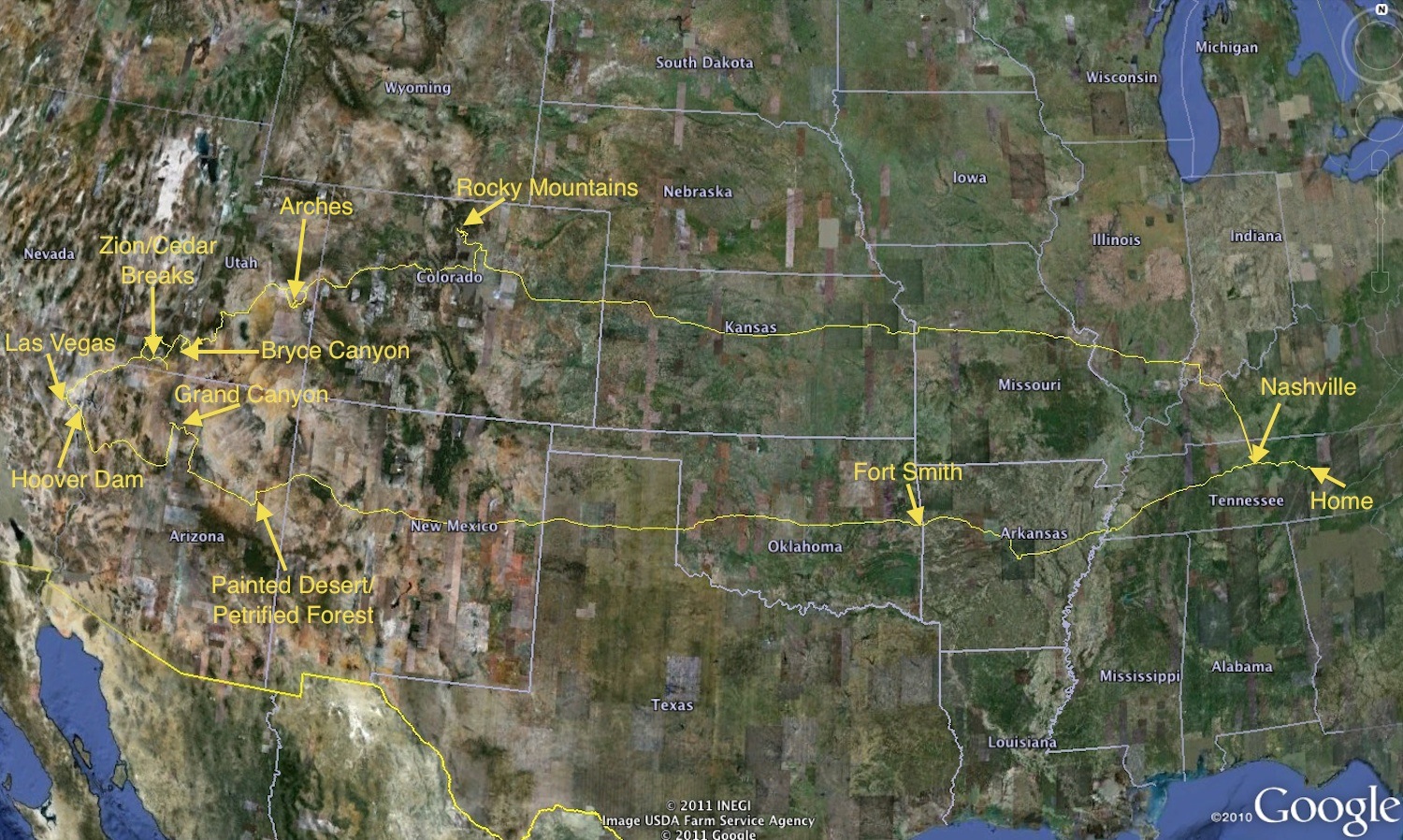
Betsy and I have returned from a wonderful 19-day trip out west.  The picture above, which can be enlarged by clicking on it, shows the highlights of our trip.  We drove 5,414 miles, passed through 14 states (counting Tennessee), visited nine National Parks, did some hiking and even saw some waterfalls.  Oh, yes, we also took many, many pictures.

I have to admit that Bryce Canyon was my favorite place — the hoodoos were absolutely fantastic.  But the Grand Canyon was every bit as grand as the name implies.

I think the high points for Betsy were the snow we encountered at both Cedar Breaks and Rocky Mountains National Park.  Six-foot drifts of snow in the June were a treat for my Beautiful Bride.  It almost made up for the snow we didn’t get here last winter.

Cades Cove: The Henry Whitehead Place

June 2, 2011

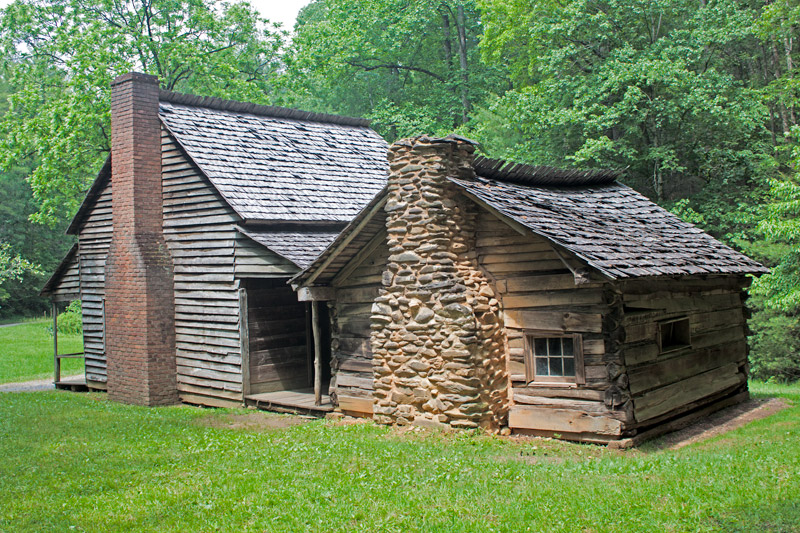
The Henry Whitehead Place in Cades Cove, Tennessee, showing the original cabin in the back. May 23, 2011.

A visit to Cades Cove can be scenic, interesting and educational all at the same time.  Getting off the beaten path can be fascinating.

Betsy and I came across the Henry Whitehead Place after leaving the Cade Cove Loop Road on our way to Parson Branch Road.  The Henry Whitehead Place is really two structures in one.  The original cabin (on the right in the picture above) was built by the brothers of Matilda Shields Gregory after her husband deserted her and her young son.  Because the brothers needed to get shelter for their sister in a hurry, the cabin they built is one of the roughest in Cades Cove.  The logs were rough-hewn with a felling axe and the stone chimney was made of rubble.

In 1898 Matilda married Henry Whitehead, a widower.  Henry built one of the nicest log homes in the cove.  The home had a brick chimney, which was unheard of at the time because bricks had to be made by hand.  The cabin itself was made of square-sawed logs finished inside to be smooth and attractive.  It was also warm by Cades Cove standards since the square log construction was naturally well insulated by walls approximately four inches thick with practically no space between the logs.

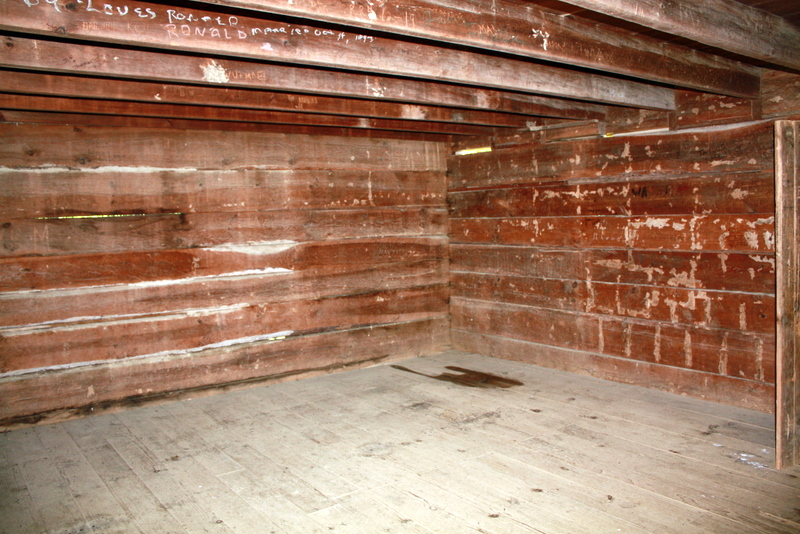
The interior of the Henry Whitehead Place, Cades Cove. May 23, 2011.

Betsy took this interior shot of the new cabin, showing the square-sawed logs forming the wall.

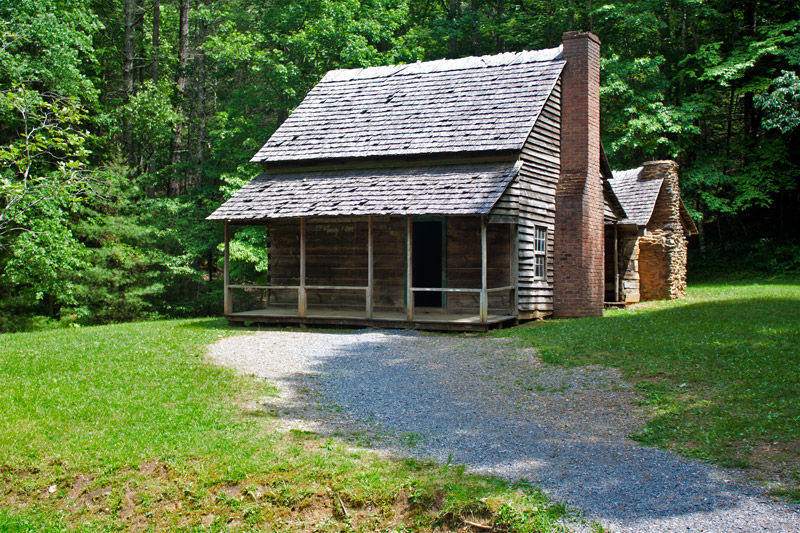
The Henry Whitehead Place, Cades Cove, Great Smoky Mountains, Tennessee. May 23, 2011.

The Henry and Matilda Whitehead place is the only square-sawed log home remaining in Cades Cove.  It is, in fact, the only one left in the entire Great Smoky Mountain National Park.

Down Memory Lane: The Blue Ridge Parkway

May 26, 2011

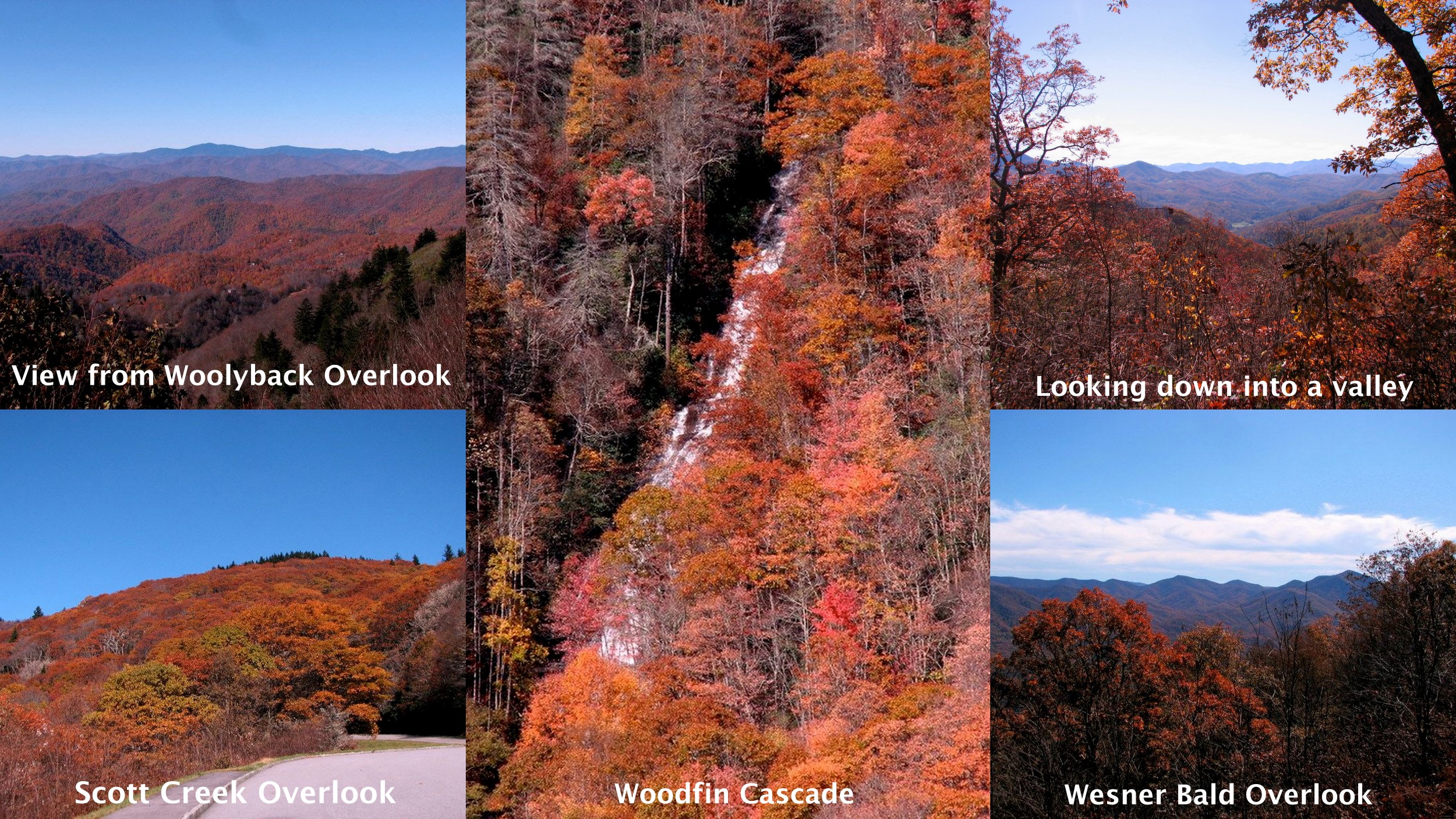
In October, 2009, Betsy and I took the scenic route home from Maggie Valley, North Carolina, by taking the Blue Ridge Parkway from Maggie Valley to its southern terminus in the Smokies.  Although we were a little late to see the best of the autumn colors, the mountains were still a glorious sight, which we thoroughly enjoyed, stopping at just about every overlook on our way.

To see larger versions of these pictures and others, click HERE.

Reflections in the Sand

May 19, 2011

The pier at Ocean Isle Beach, North Carolina. May 2, 2011.

One morning, as I was walking along the beach at Ocean Isle toward the pier, I was struck by the reflection of the pier in the wet sand.  It was nearing low tide, and there was plenty of wet sand to capture the reflections of the supports.