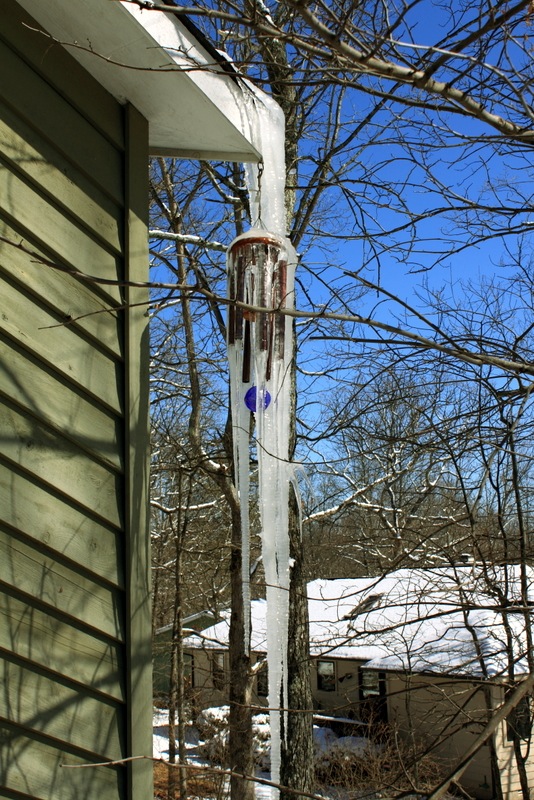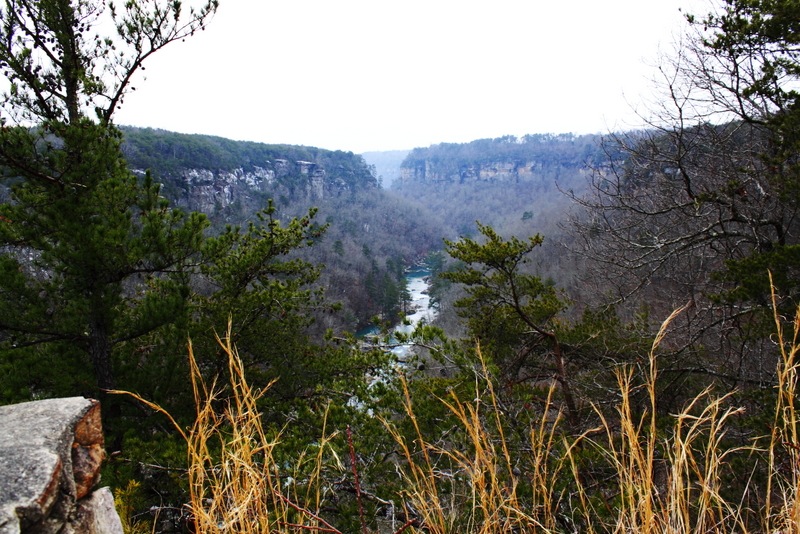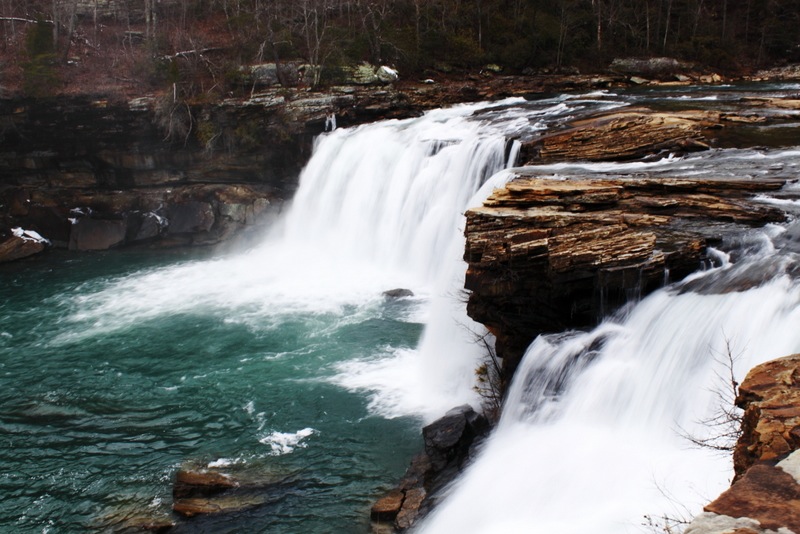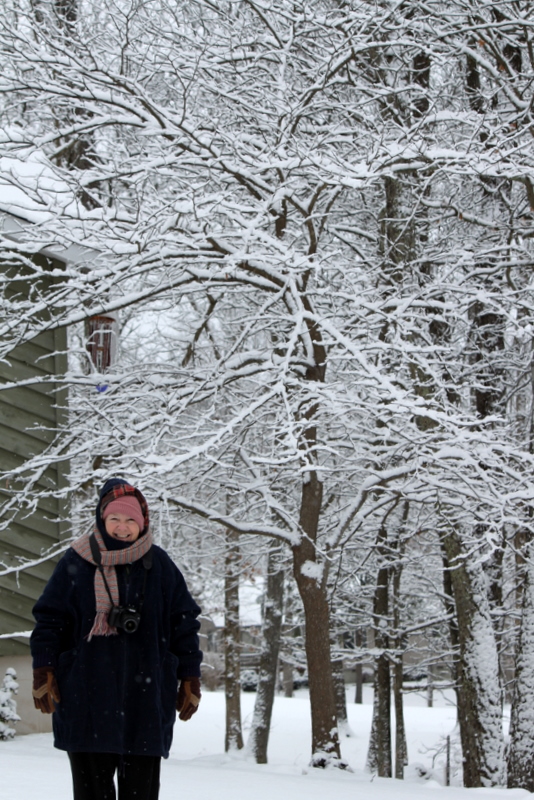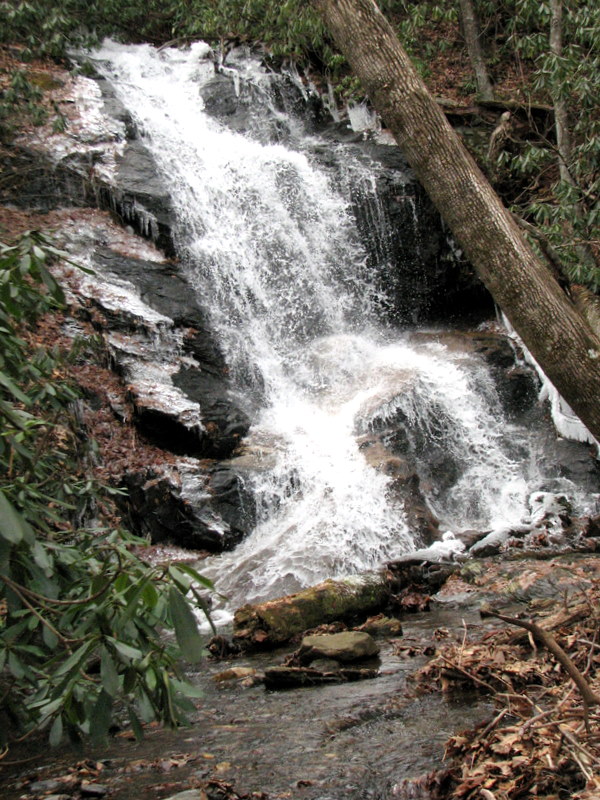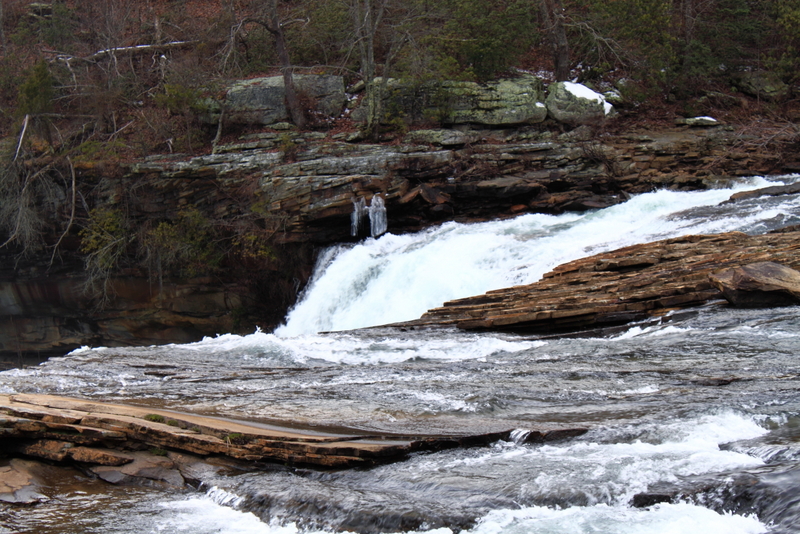
Little River Falls, Fort Payne, Alabama. February 14, 2010.
I’ve mentioned, in connection with my new camera, that I’m experimenting with RAW format images. Several people have asked me about RAW, so I thought I would share what little I know about it.
Until I got this new camera (a Canon EOS Rebel T1i) my digital cameras saved images as JPEG files (some digital cameras use TIFF format). In order to get the JPEG file the camera converts the light striking the sensor in the camera to something that we can see. JPEG files typically are made up of 8 bits of data per color per pixel. But the sensor can provide 14 or more bits of data per color per pixel. We can see the JPEG image, but the conversion uses only part of the recorded data.
I know I’m showing my age, but think of the days when cameras used film. A JPEG file is like a print or a slide — we can see the image. A RAW file contains all the data the camera can provide (those 14 bits per color per pixel) but it is like undeveloped film — we can’t see the image until some processing is done. In working with RAW format I have to do the work that the camera does with JPEG.
So what have I learned after a week of experimenting? The most obvious thing is that RAW files are much bigger than JPEG files (about four times bigger in my case). Another thing is that to take full advantage of RAW data, special software is needed (Canon included software with the camera). On the other hand, since all of the sensor data is present, images can be ‘fixed’ in ways that might not be possible otherwise. It is even possible to change some of the picture settings after the picture has been taken (it looks better with landscape settings than with standard settings).
Right now I’m not sure how much I will use RAW. I’m cheating right now and am saving images as both RAW and JPEG files. The card in the camera is big enough that I can take several hundred pictures before I have to download to my computer, so I’ll probably continue to do that while I learn more about the things I can do with the RAW format.